Fermentation is not a technique applied to ingredients. It is what happens when ingredients are trusted with time – and time is trusted to do the work that heat and speed cannot.
THE FOUNDATION
Most cooking works against time — compressing it, accelerating it, forcing a result before patience can develop one. Fermentation works the other way. It asks the cook to step back. To set conditions, then wait. To trust that what emerges from weeks or months of careful tending will be richer, more alive, and more layered than anything speed could produce.
At One by Spork, fermentation is not a technique among others. It is a governing philosophy — one that runs through the kitchen and the bar in equal measure, shaping flavor at the level where flavor begins: before the heat, before the plating, before the guest arrives.
TWO PAIRING PATHS
Fermentation does not add flavor. It reveals what was always possible.
THE FERMENTS
Dozens of ferments. One practice.
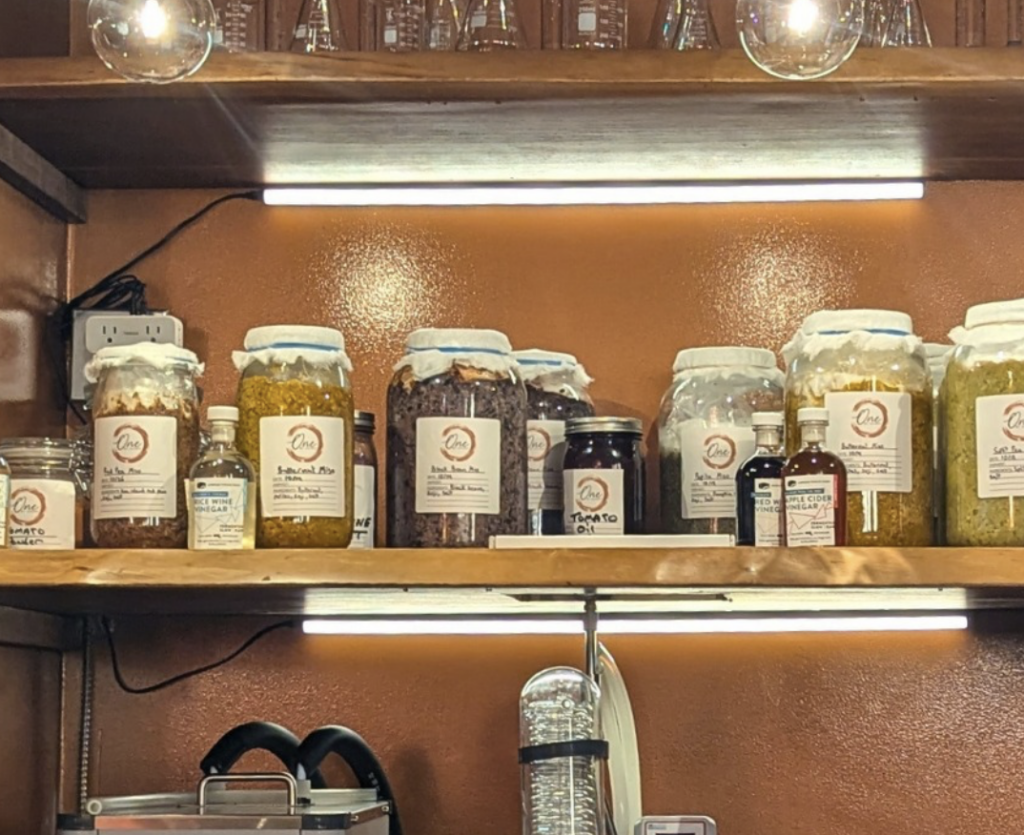
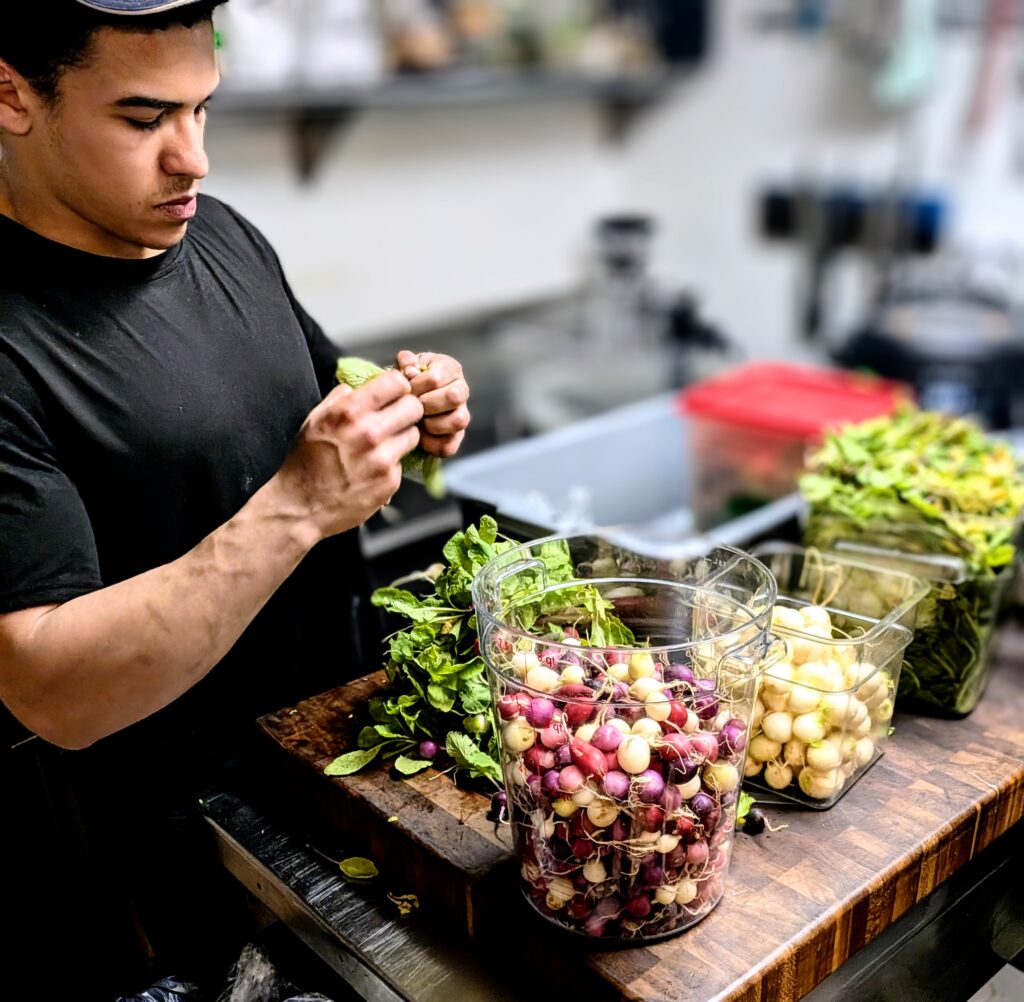
The program spans misos, garums, and amazakes — each made from ingredients chosen not for convention but for character. Rye bread. Chickpeas. Macadamias. Mushrooms. The starting material shapes the result, and the result shapes the menu.
MISO
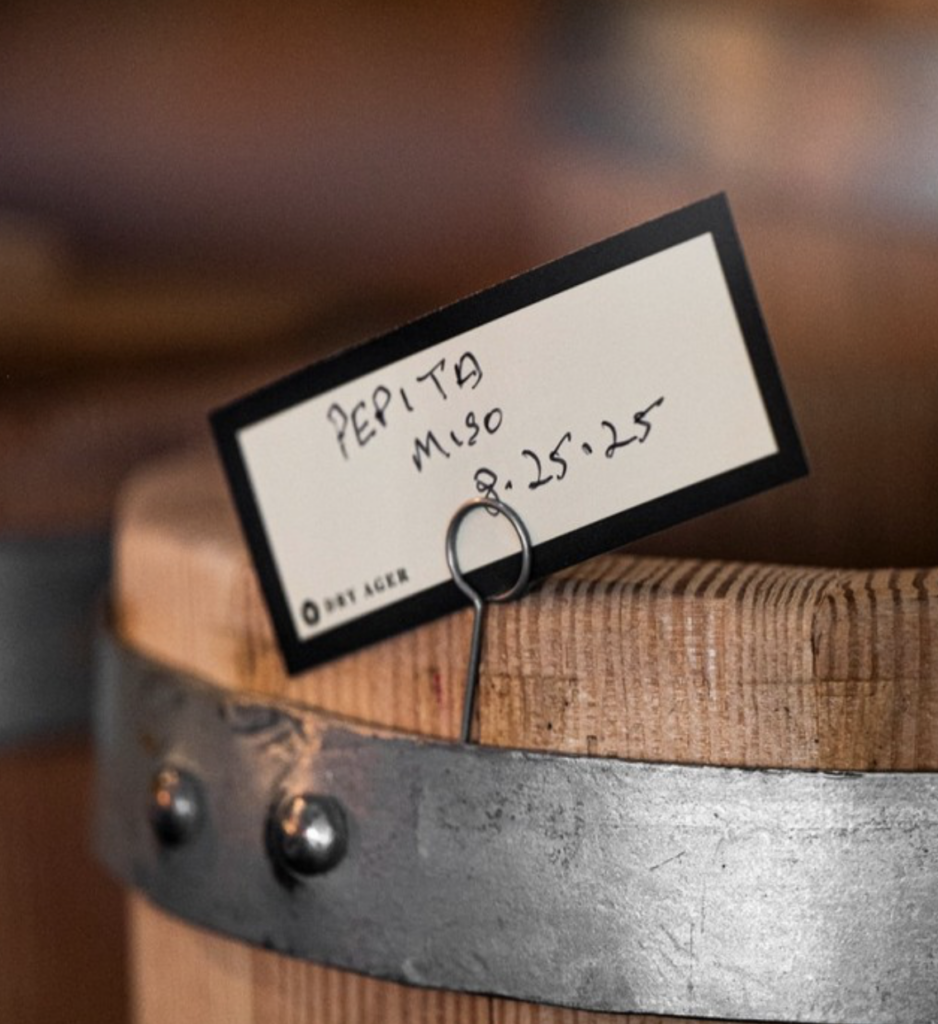
Traditional in its patience. Restless in its ingredients. Red peas, macadamias, chickpeas — each producing a paste with its own register of umami, its own salinity, its own relationship to what it will eventually season. A miso made here is not a pantry staple. It is a decision made months in advance about what a dish will taste like.
Garum
Amino sauces of deep, particular intensity — capable of adding a complexity to a sauce or a glaze that no fresh ingredient can replicate. A spoonful enriches without announcing itself. The best garum is the one you cannot name, only the feeling that something is more complete than it should be.
Amazake
Naturally sweet, deeply bodied, and alive with the slow activity of koji. Amazake does not assert itself — it deepens what it enters. A sweetness without cloying. A body without weight. It moves between kitchen and bar because it belongs to both, and to neither.
10 Bucket-List Chef’s Tables for Wine Lovers
THE FERMENTATION ROOM
A space held to the work.
Behind the kitchen is a dedicated fermentation room — an environment built to hold precise temperature, humidity, and time. Every condition is logged daily. Every batch is tended with the same attention given to any course on the menu.
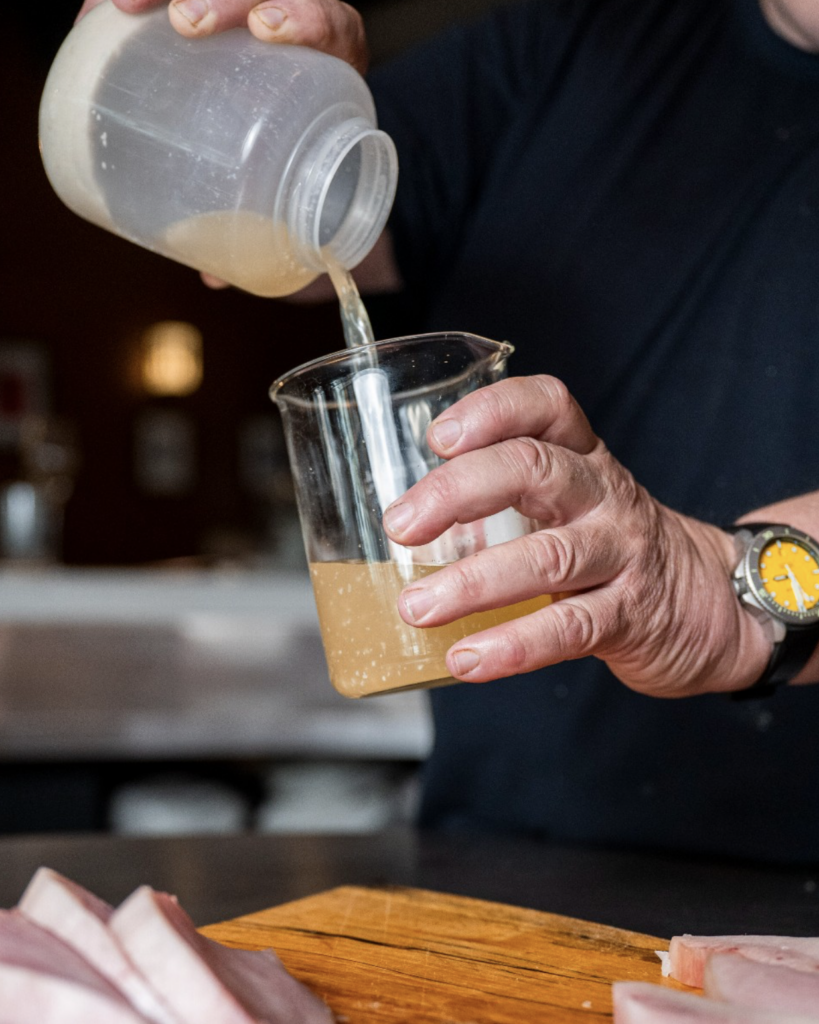
At the center of it all is koji rice. The mold does not hurry. It requires the right warmth, the right moisture, and the willingness to wait. What it returns, given those conditions, is the biological foundation for everything the program produces — the amino acids and natural sugars that unlock depth in ways that no other process can replicate.
This room does not exist for efficiency. It exists because fermentation requires a home — a held environment where time can do what time does best.
HOW IT ARRIVES
Everywhere, quietly.
The guest rarely encounters fermentation as a named ingredient. They encounter its effect — brightness in a dressing, depth in a sauce, unexpected roundness in a cocktail, complexity in something that reads simply as chocolate.
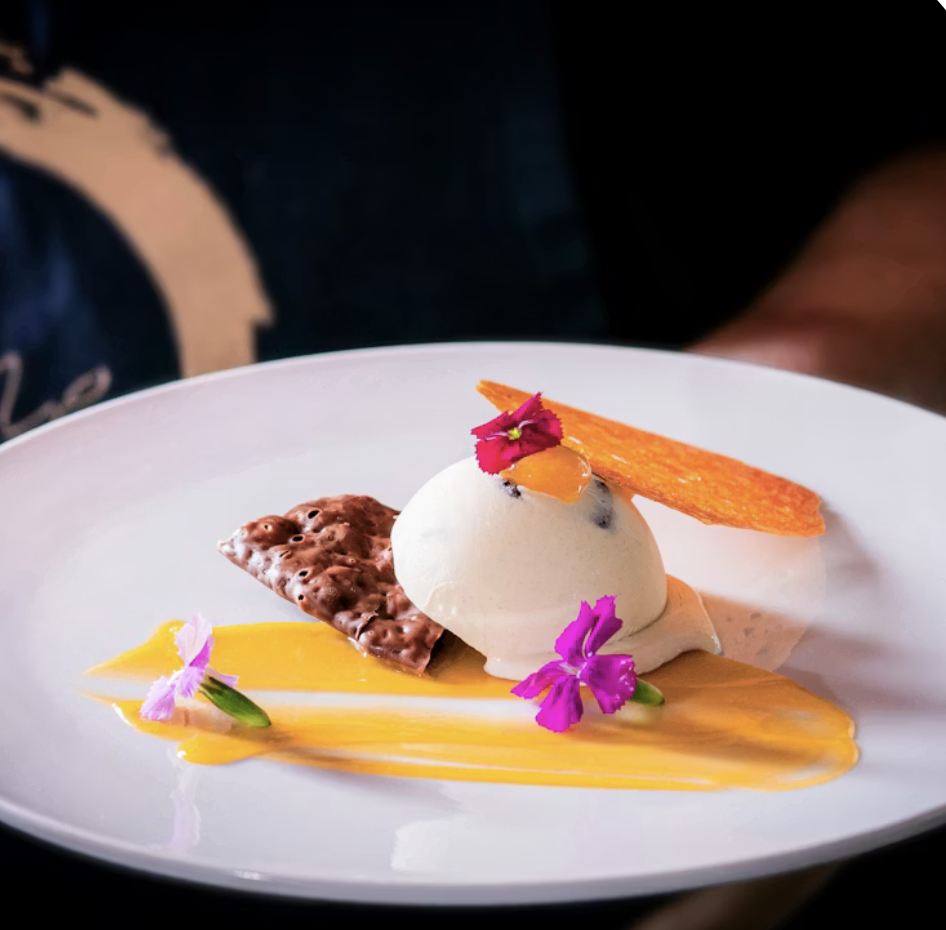
A miso made from red peas, seasoning a dressing that anchors a vegetable course. A garum enriching the base of a sauce until it holds more than its parts. A silky amazake folded into a cocktail pairing, adding body and sweetness without sugar. A clarified tomato ferment — bright and alive with an acidity that fresh tomato cannot sustain. Miso-infused chocolate at the turn from savory to sweet: earthen, bitter, and deeply made.
Every dish and every drink in the tasting menu carries some trace of the fermentation program. Not as a signature style or a naming convention, but because fermentation is simply how the flavors here are built — from the inside out, over months, with patience as the primary technique.
What patience builds, no shortcut can replicate.
There is a particular quality to something that has been given time. It does not announce itself as complex. It simply is — layered in a way that reveals itself across the length of a meal rather than in a single moment. That quality cannot be engineered in an afternoon.
By the time a dish lands on the table, the ferment at its core has already lived a long, slow life. Weeks of tending. Daily logs. Conditions held with care. What you taste at the table is the end of that patience — and the beginning of what the kitchen can do with it.