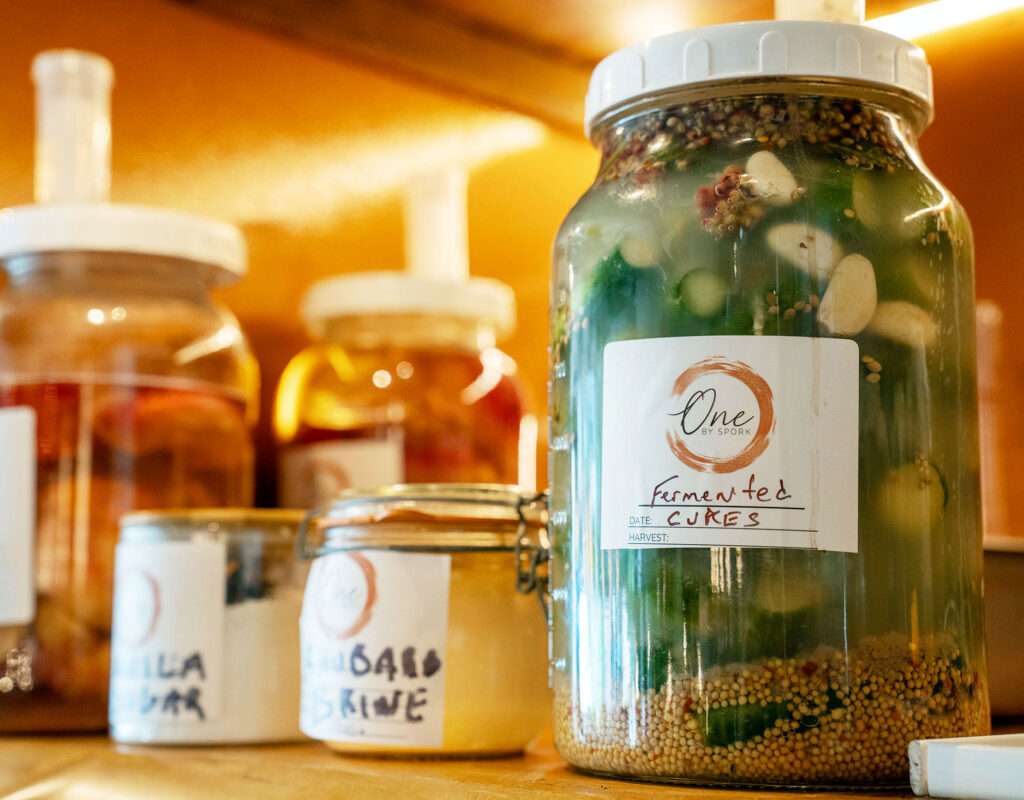
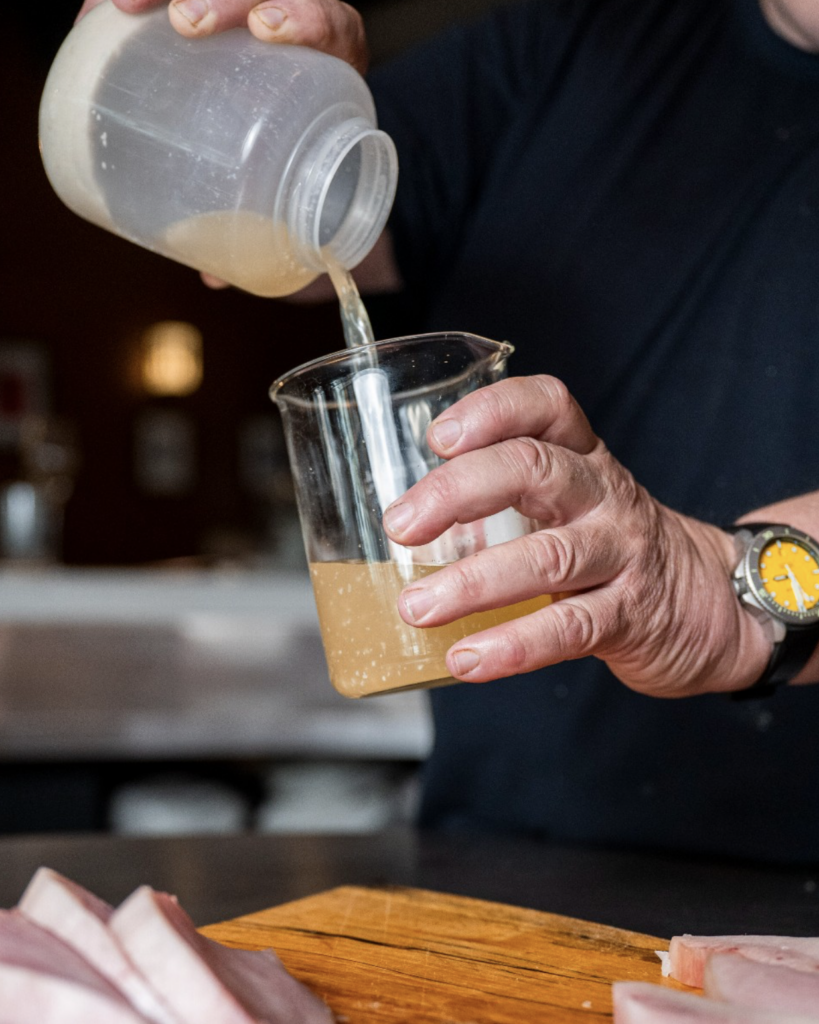
Fermentation is not a technique applied to ingredients. It is what happens when ingredients are trusted with time – and time is trusted to do the work that heat and speed cannot.
What patience builds, no shortcut can replicate.
Most cooking works against time — compressing it, accelerating it, forcing a result before patience can develop one. Fermentation works the other way. It asks the cook to step back. To set conditions, then wait. To trust that what emerges from weeks or months of careful tending will be richer, more alive, and more layered than anything speed could produce.
At One by Spork, fermentation is not a technique among others. It is a governing philosophy — one that runs through the kitchen and the bar in equal measure, shaping flavor at the level where flavor begins: before the heat, before the plating, before the guest arrives.
THE MOTHER CULTURE
KOGI: WHERE IT ALL BEGINS
Before there is miso, garum, or amazake, there is koji. Every fermentation in this kitchen starts with the same small, exacting transformation, then goes its own way from there.
Koji is rice, or another grain, inoculated with a single mold and given the conditions to do its work. Aspergillus oryzae, to use its name. What it produces are enzymes, amylase and protease, that break starch into sugar and protein into amino acid. That conversion is the source of nearly every umami flavor this kitchen builds: the sweetness in an amazake, the depth in a miso, the savor in a garum. Different bases produce different characters. The process underneath is the same.
We treat koji less like an ingredient and more like a starting condition. Once it's cultivated, everything downstream becomes a question of what to grow on top of it. Rye bread koji becomes one kind of miso. Macadamia becomes another. The mold doesn't change. What's built from it does.
This is why koji sits at the center of the fermentation room rather than the edge of it. It isn't one ferment among many. It's the one the others are made of.
THE FERMENTS
Dozens of ferments. One practice.
The program spans misos, garums, and amazakes — each made from ingredients chosen not for convention but for character. Rye bread. Chickpeas. Macadamias. Mushrooms. The starting material shapes the result, and the result shapes the menu.
MISO
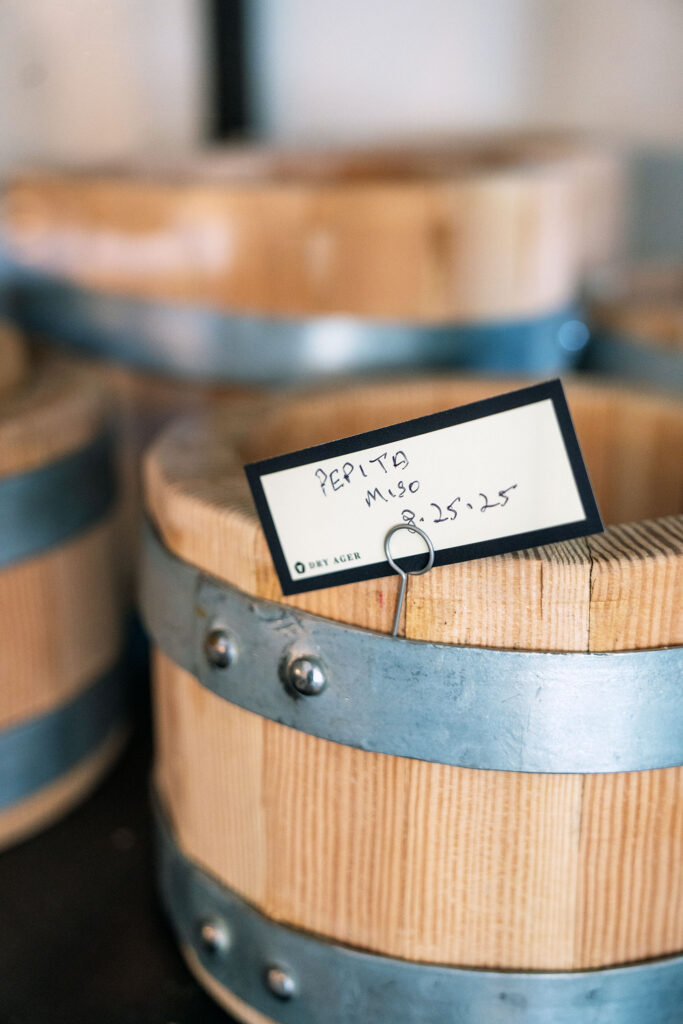
Traditional in its patience. Restless in its ingredients. Red peas, macadamias, chickpeas — each producing a paste with its own register of umami, its own salinity, its own relationship to what it will eventually season. A miso made here is not a pantry staple. It is a decision made months in advance about what a dish will taste like.
Garum
Amino sauces of deep, particular intensity — capable of adding a complexity to a sauce or a glaze that no fresh ingredient can replicate. A spoonful enriches without announcing itself. The best garum is the one you cannot name, only the feeling that something is more complete than it should be.
Amazake
Naturally sweet, deeply bodied, and alive with the slow activity of koji. Amazake does not assert itself — it deepens what it enters. A sweetness without cloying. A body without weight. It moves between kitchen and bar because it belongs to both, and to neither.
Fermentation does not add flavor. It reveals what was always possible.
DRY AGING
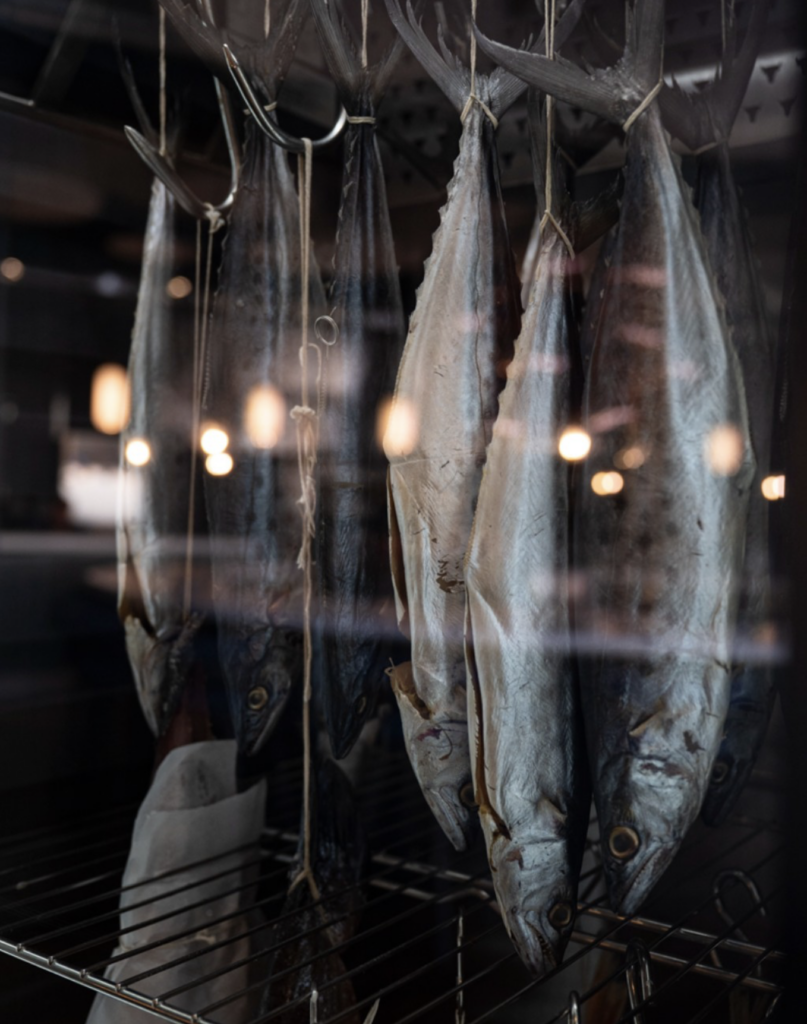
Dry aging asks for a kind of restraint most cooking doesn’t allow. In a dedicated room, temperature and humidity are held steady while moisture slowly leaves the protein and flavor concentrates in its place. It’s the same discipline that runs through our fermentation program, just pointed at a different ingredient. The depth that results isn’t something you can rush into existence. You can only wait for it.