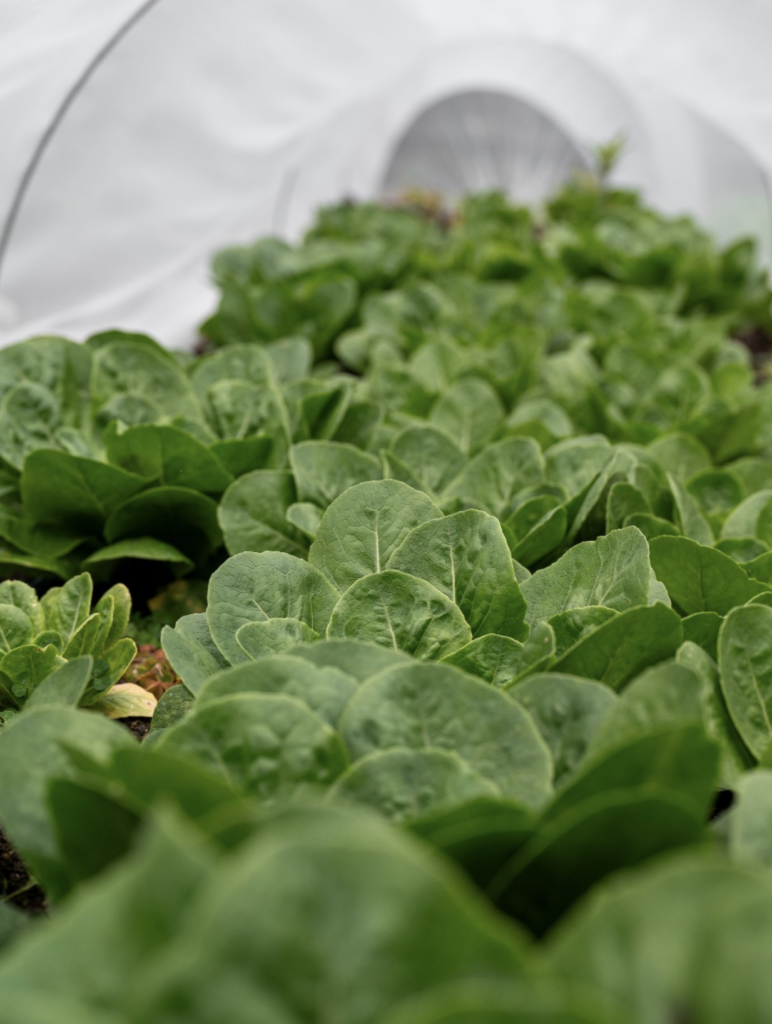
The farm is not a feature. It is where the work begins, and where the philosophy becomes something grown, not stated.
A LIVING PANTRY
What began as a garden has grown into a purpose.
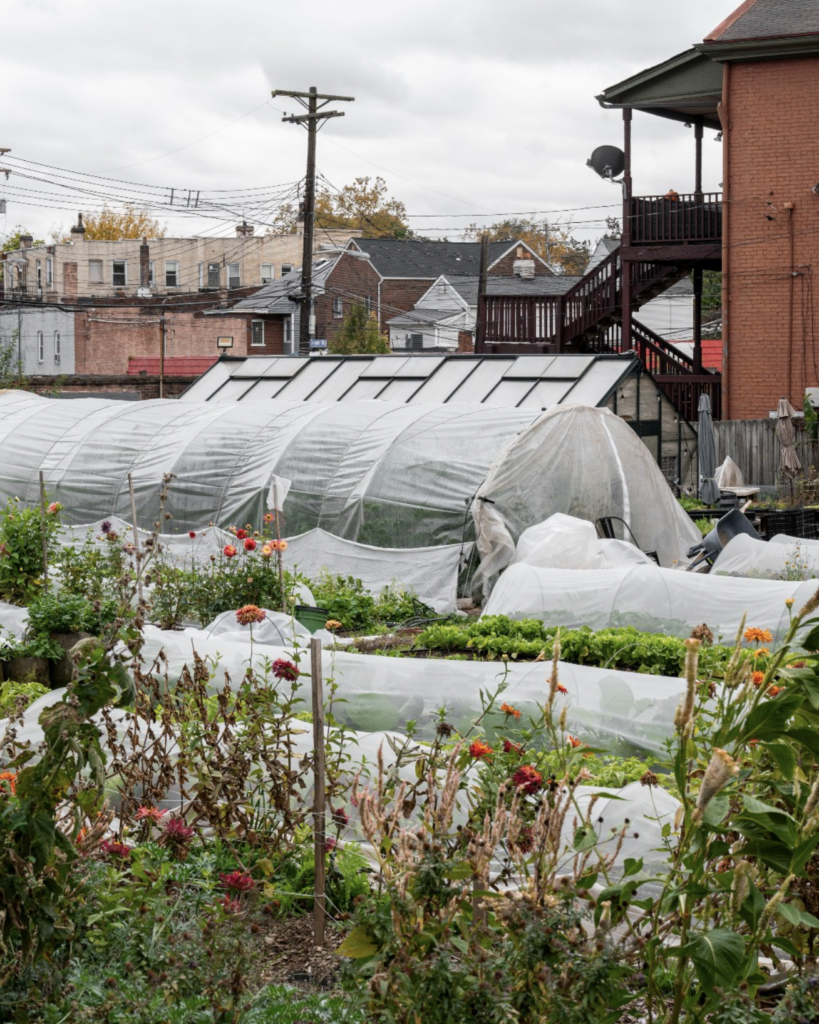
For years, the lot adjacent to the restaurant held raised beds — eight years of amended soil, rotting wood frames, and the gradual accumulation of well-meaning but imprecise care. Then, a few months ago, farm manager Justin Lubecki was given the space and the latitude to start over.
What followed was hard, honest work: hauling debris, testing the soil for heavy metals, rebuilding the ground from the microbial level up. What emerged is one of Pittsburgh's first high-production, in-ground urban micro farms — nearly a quarter acre of living soil, tended with the same care that shapes every seat at the table.
We are working toward USDA urban farm registration. But that designation only names what the ground has already become.
THE PHILOSOPHY
The farm is the philosophy made visible.
The values that hold every seat at the table — connection, purpose, responsibility, restraint — do not begin at the kitchen door. They begin in the soil. When Justin brings something in from the farm, the kitchen does not adapt a recipe to it; the farm reshapes what is possible. The menu follows the ground.
THE PHILOSOPHY
The four pillars of the one farm
Conscious Creativity
The garden does not support the menu. It authors it." Innovation grounded in respect for ingredients, makers, and the ecosystems that sustain us. What grows determines what we create — not the other way around.
Harmonic Gastronomy
The narrative starts at the root, not the plate." The farm shapes the arc of the meal before a single recipe is written — before anything has been seasoned, plated, or poured.
Crafted Connection
To know where something grew is to know why it matters." The farm anchors the meal to this city, this neighborhood, this particular season. That specificity is what makes it feel like somewhere, not anywhere.
Presence Over Performance
The quietest ingredients speak the loudest." We do not grow for spectacle. What we plant must be honest, necessary, and worth supporting — whether or not anyone notices the care behind it.
¼ acre Of living, tested, regenerative soil
Adjacent to the restaurant. Bloomfield-grown. Free of contaminants. Alive with microbial life.
300% Expansion in growing capacity
From raised beds to full in-ground cultivation — built on years of soil health work, not seasons.
THE TEAM
Justin Lubecki
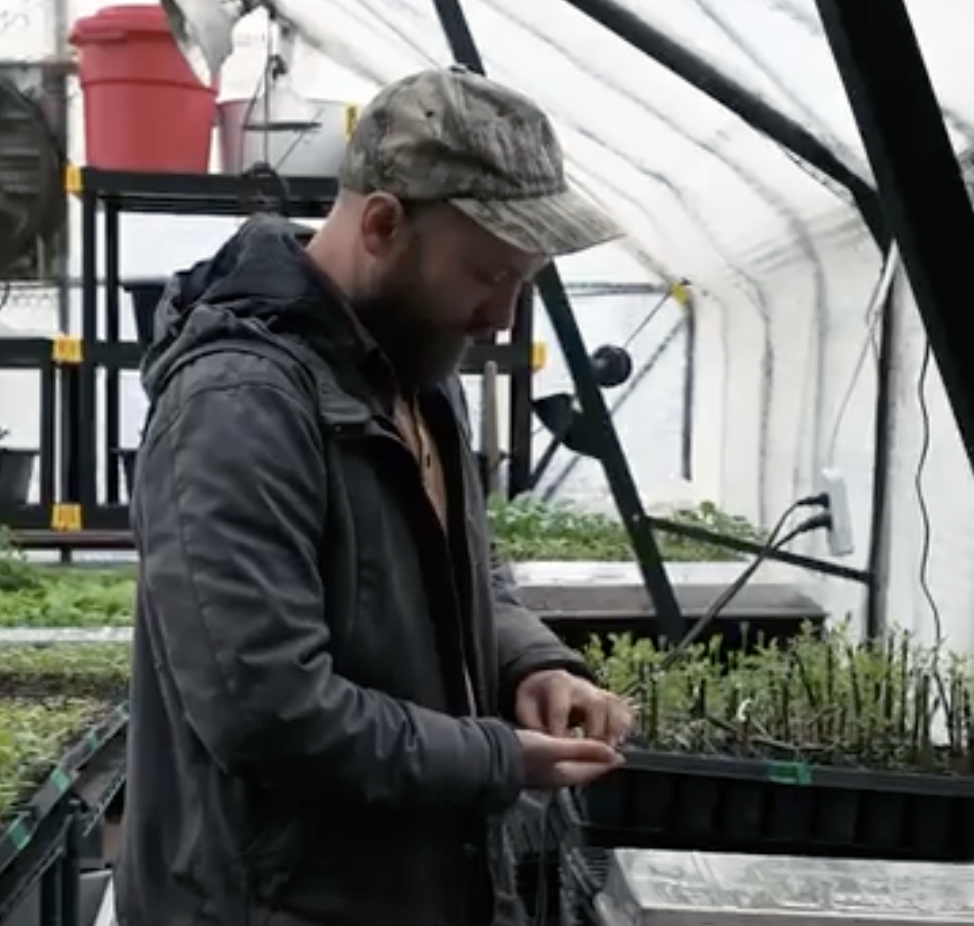
Justin Lubecki has been farming and foraging for more than a decade. On his own land in Plum, he works with holistic ecological methods — no irrigation, minimal interference, a deep trust in what the soil wants to do. He brought that same philosophy here, and then went further.
Working alongside farmers Victoria Homza and Liz Boyd, Lubecki cleared the debris, rebuilt the beds from the ground up, and turned to the work of regenerative farmer and teacher John Kempf for guidance: strengthening the plant through the health of the soil, not in spite of it.
“The healthier the plant, the healthier the soil you leave behind.” — Justin Lubecki, Farm Manager
What this farm produces, it produces quietly. The yields here are not measured in volume. They are measured in what they make possible at the table.
WHAT GROWS HERE
What the soil holds.
In-ground cultivation means working with the land rather than around it. What grows here reflects years of patient tending — and a willingness to experiment with what this ground, this city, and this kitchen can do together.
In-Ground Living Soil
The raised beds are gone. In their place: tested, rehabilitated in-ground soil built on microbial health. Stronger plants. Deeper nutrients. More flavor.
Seasonal Staples
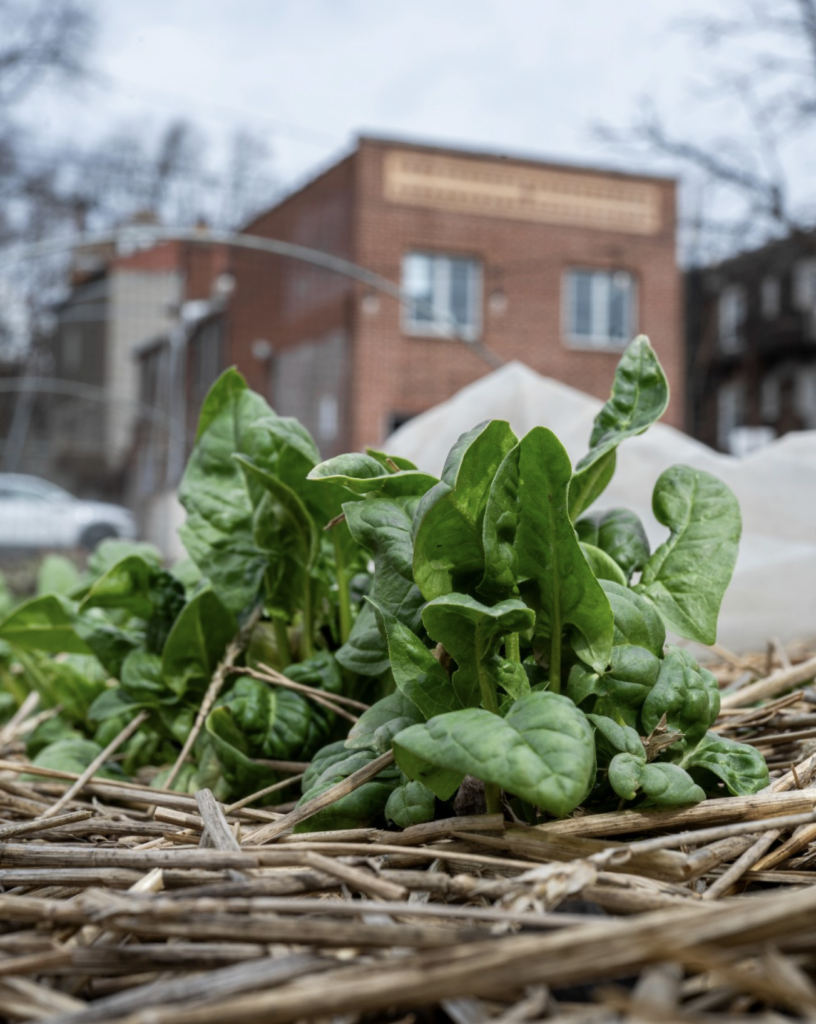
Greens, peppers, tomatoes, brassicas — the backbone of the kitchen’s vocabulary, grown with the intimacy of a kitchen garden rather than the efficiency of a farm.
Native Perennials
Hazelnuts, grapes, and ginseng are taking root alongside the seasonal rotation — ingredients that will deepen in character the longer they are tended.
Experimental Crops
Hardy almonds adapted from the Pacific Northwest. Sichuan peppercorns. White strawberries. Cold-hardy olives. These are not novelties — they are questions we are asking of the soil and of the kitchen, season by season.
The Pollinator Meadow
A meadow now blooms at the edge of the farm. At the entrance, a willow arch is coming into its own — wisteria and other flowers threading through it. The farm does not begin at the gate; it announces itself before you arrive.
Preservation with Purpose
What the season withholds, we hold onto. Fermentation, curing, drying — preservation is not about extending shelf life. It is about extending the story of an ingredient into the months that follow.
A single table. A single season. An unbroken thread.
There is something that happens when a chef receives an ingredient he did not request, something still unfamiliar, still becoming what it will be. The instinct takes over: What can I do with this? How do I honor what it already is?
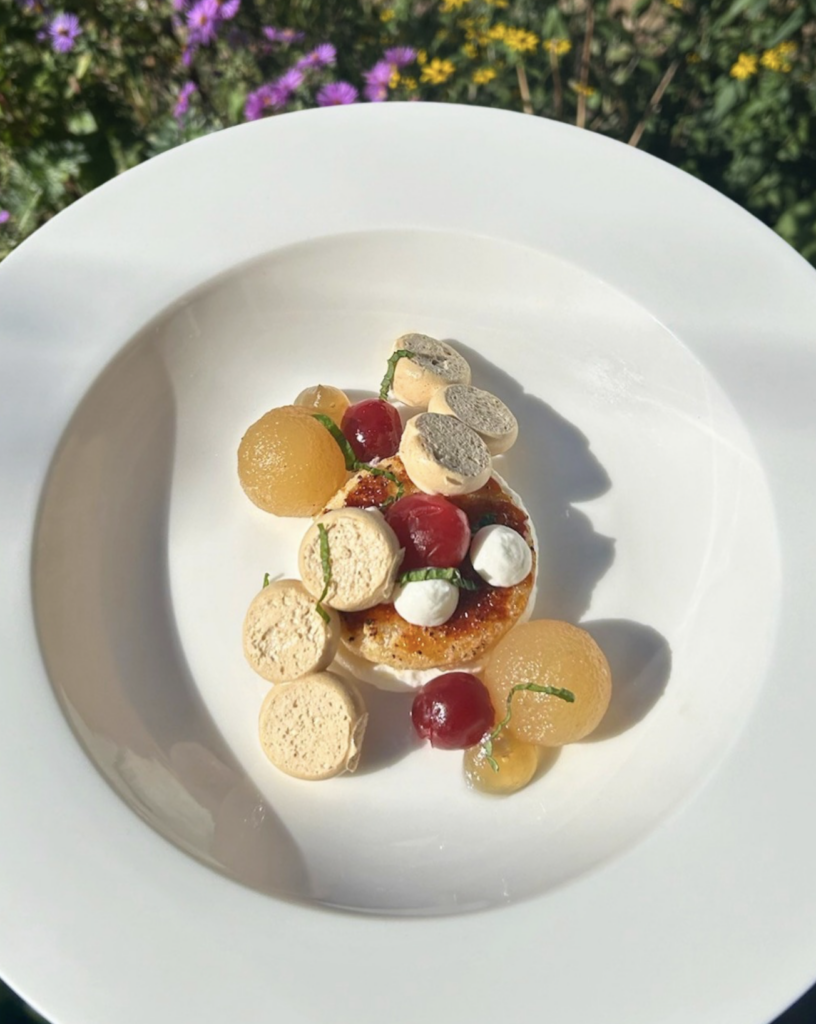
That question — asked in the kitchen, answered at the table — is what the farm makes possible. Pollinated but immature zucchini flowers, harvested before they could yield. Chive blossoms as a finishing grace note. A salad course built on the full diversity of what the soil can hold in a single season.
These are not garnishes. They are the reason the farm exists.
When something on the plate tastes like a place — when it carries the particular quality of a season in Bloomfield — that is not poetry. That is what it means to grow with care.